The FIS 1000 stands for precision and efficiency in web inspection. It detects gels, black specks, holes, insects, oil marks and many other contaminants in real time — for maximum quality in every production batch. The series comprises four variants on the same platform: Surface Camera, Tandem, Biaxial and Economy.
// Web · scan · classificationThe FIS 1000 is a prime example of precision and efficiency in the surface inspection of running webs. Whether film, biaxial film or nonwovens and textiles, the system ensures optimal quality and consistency in every frame.
All variants use the same technology, the same detection performance and the same software — they differ in camera count, design and equipment.
The core variant of the series for real-time detection of surface defects on running webs.
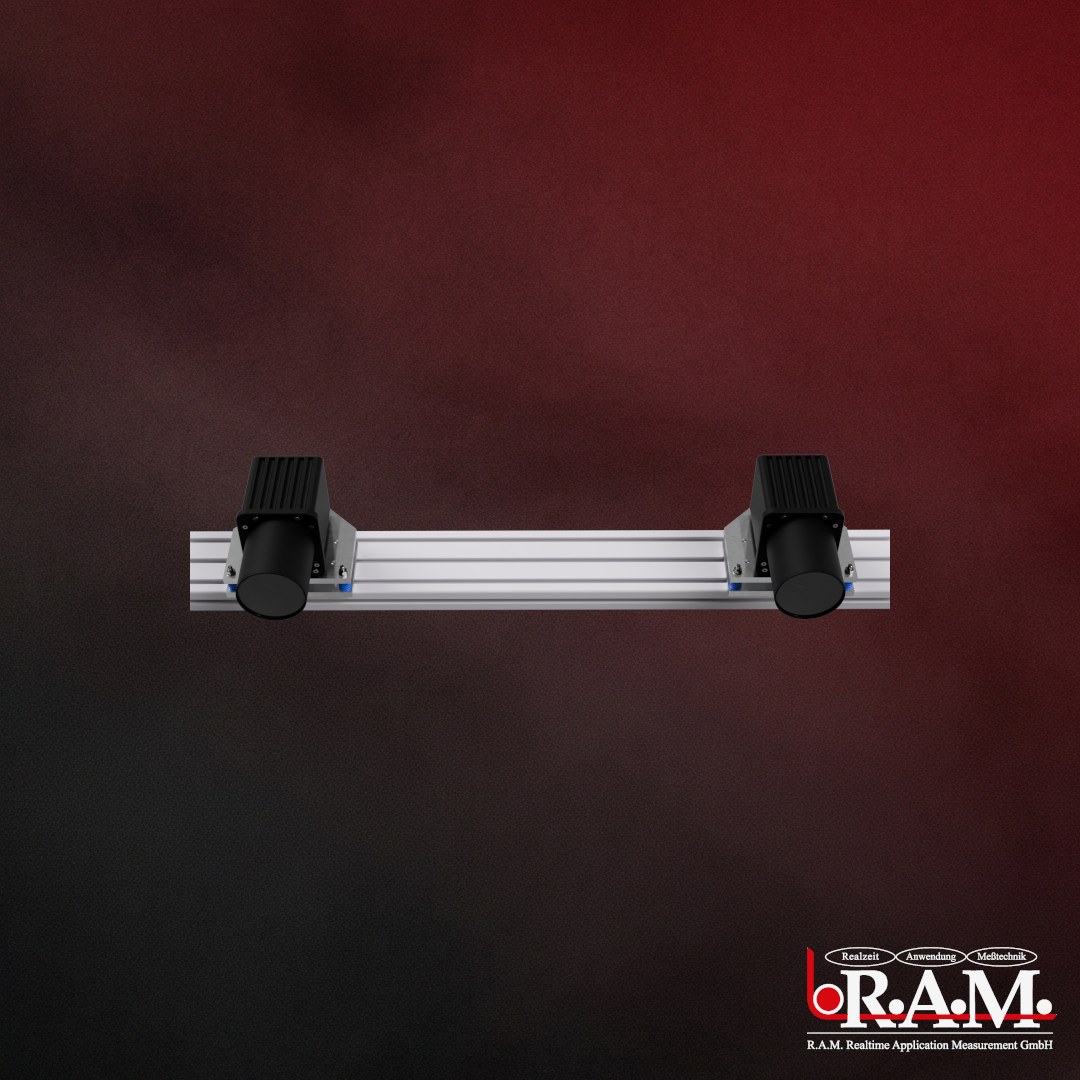
In a tandem setup, two or more cameras work synchronously together — for extended coverage and higher inspection performance in demanding applications.
Biaxial films place special demands on inspection — the FIS 1000 – Biaxial is built precisely for this.
Reduced to the essentials — without compromising detection performance.
Reliable inline inspection of running film webs — defects are detected and documented in real time.
Tailored to the production of biaxially oriented films — monitoring the stretching process (e.g. BOPP, BOPET).
From fibre distribution to texture consistency — every textile meets the desired specifications.
The FIS 1000 detects a broad spectrum of surface defects directly on the running web — reliably and reproducibly.
Gel inclusions in the material.
Dark spots and burnt particles.
Holes and breakthroughs in the web.
Trapped insects and flies.
Oil marks and smears on the surface.
Foreign particles and other contaminants.
Burnt and discoloured spots from the extrusion process.
Small, lens-shaped inclusions in the film.
Typical defects in nonwovens – polymer drips, thin spots and wrinkles.
The FIS 1000 is a complete inspection system: it integrates into your line, keeps every defect traceable and shares its data openly.
Programmable adaptive LED long-field lights — for transmitted, reflected, bright-field or dark-field illumination. Lighting is matched to material and defect type.
Coupling to the production line via digital inputs and outputs: automatic recipe pre-selection, roll-change and encoder signals, inspection stand-by, plus control of alarm lamp and line stop.
The operator classifies defects from real defect images; the classifier then sets the inspection parameters. Any number of size and type classes can be defined.
Continuous wallpaper view of all defects — symbolic, as an image and as a grey-scale crop. Every defect stays traceable across the whole web.
Log data as CSV files, via TCP/IP or in customer-specific formats — open for integration with higher-level systems.
FIS systems use line cameras based on CoaXPress 2.0 in 4K, 8K or 16K; the Economy version also with GigE Vision, depending on the configuration.
Subject to technical changes. Details of your configuration are available on request.
We will show you how the FIS 1000 can advance your surface inspection and production.